
3 Most Popular Types of Feed for Livestock
- McKenna Hines
- Jun 4, 2025
- 9 min read
Why Feed Choice Matters
Choosing the right feed for livestock plays a critical role in the health, productivity, and profitability of any farming operation. Animals require a carefully balanced diet to grow, reproduce, and thrive throughout every stage of life.

The three most common types of feed for livestock—hay bales, alfalfa cubes, and feed pellets—offer unique benefits that serve various needs. From fiber and energy to protein and convenience, each feed type supports different livestock goals.
Providing quality feed for livestock isn’t just about nutrition—it’s also about reducing waste, simplifying chores, and supporting long-term herd health. The right feed can increase weight gain, milk production, and fertility rates.
Livestock that are properly nourished are more resistant to disease, more consistent in growth, and more productive overall. That’s why smart feed selection is a cornerstone of successful animal management. Sunrise Farms says, “Choosing the right animal feed can make a big difference in the well-being of your animals.”
This article breaks down the advantages and uses of hay bales, alfalfa cubes, and feed pellets to help you decide which feed for livestock is best for your operation.
Hay Bales: The Traditional Foundation of Livestock Diets
Hay bales are the most recognizable and widely used feed for livestock. They serve as the foundation of forage-based diets and are especially important for ruminants like cattle, goats, and sheep.
Grass hay, alfalfa hay, and mixed bales all offer long-stem fiber that promotes digestion and rumen function. This fiber also stimulates saliva production, which helps buffer stomach acid and supports a healthy gut environment.
Because hay bales mimic natural grazing behavior, they keep livestock satisfied and occupied. This is essential for reducing stress and preventing boredom-related habits like cribbing or excessive pacing.
At RR Ranch, we offer clean, tightly packed hay bales that store well and retain their nutrition. Our bales are ideal feed for livestock of all types and are sourced to withstand Utah’s unique climate conditions.
Whether used as a full ration or part of a broader feeding program, hay bales remain a staple feed for livestock across all types of farming operations.
Alfalfa Cubes: Dense Nutrition in Compact Form
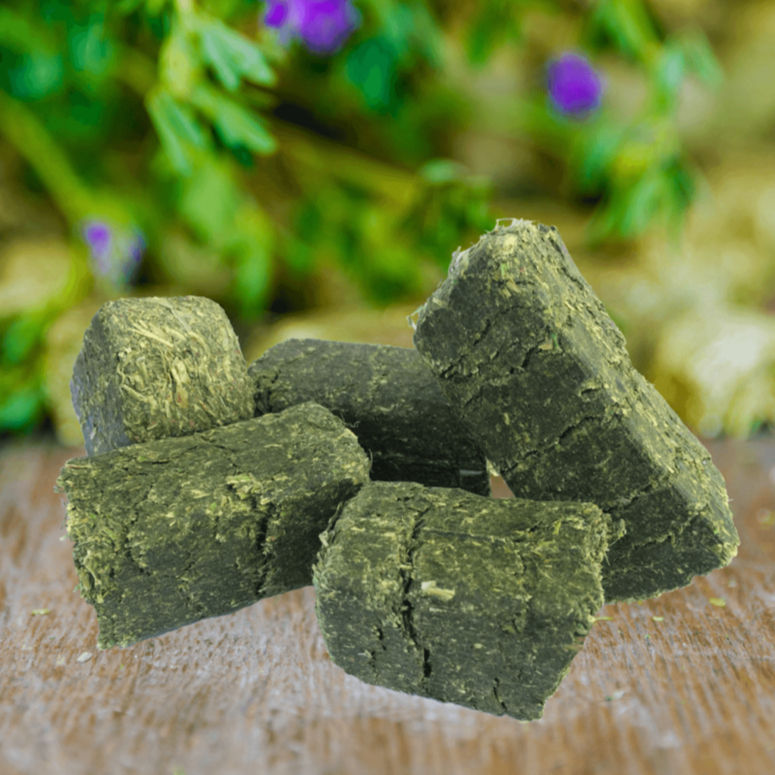
Alfalfa cubes are a concentrated, compact feed for livestock made by compressing chopped alfalfa into cube form. These are high in protein, calcium, and digestible fiber, making them excellent for performance animals and those with higher energy needs.
Unlike hay bales, alfalfa cubes are uniform in texture and easier to store and portion. Their consistency ensures animals receive the same quality in every bite, supporting steady growth and energy levels.
Alfalfa cubes can be fed dry or soaked into a mash, which helps with hydration and digestion. This makes them an ideal feed for livestock recovering from illness or those with dental issues.
RR Ranch supplies fresh, dust-free alfalfa cubes that meet the nutritional needs of horses, goats, and dairy cattle. We recommend them as a protein-boosting supplement alongside grass hay or other forage.
Because they’re dense and easy to handle, alfalfa cubes are an increasingly popular feed for livestock in both small-scale and commercial operations.
Feed Pellets: Efficiency and Balance in Every Bite
Feed pellets are another highly versatile and balanced form of feed for livestock, especially valued for their convenience and precise nutrition. Each pellet contains a uniform mix of protein, fiber, vitamins, and minerals.
Pellets eliminate the risk of selective feeding, which is common with loose grains or mixes. Animals consume the entire ration, ensuring full nutrient absorption and reducing waste.
This form of feed for livestock is ideal for fast-growing animals, show stock, or livestock in confinement. It allows for precision feeding, consistent weight gain, and improved feed conversion ratios.
At RR Ranch, our livestock feed pellets are formulated for different species and production stages. Whether you need high-protein grower pellets or maintenance formulas, we have options to match your goals.
With minimal storage needs and maximum nutrition, pellets are one of the smartest forms of feed for livestock available today.
Comparing Digestibility Between Feed Types
Digestibility is a key factor when choosing feed for livestock. The more digestible the feed, the better your animals absorb nutrients and convert them into growth, energy, or milk.
Hay bales offer natural fiber that supports rumen health but vary in digestibility depending on cut, maturity, and storage. Alfalfa cubes, on the other hand, provide highly digestible forage in a more compact form.
Pellets are processed to maximize digestibility and uniformity. This ensures a consistent supply of nutrients, making them an excellent choice for young animals or livestock in high-demand phases.

Using a combination of these feed types can optimize nutrient intake. For example, feeding hay for roughage, alfalfa cubes for protein, and pellets for targeted supplementation is a balanced approach.
Each type of feed for livestock plays a role in supporting digestive efficiency and nutrient availability when used properly.
Storage and Shelf Life Advantages
Different types of feed for livestock require different storage solutions. Hay bales need large, dry spaces and are susceptible to mold if not stored properly. Alfalfa cubes and pellets, on the other hand, offer longer shelf lives and cleaner storage.
Pellets and cubes come in bags or bulk containers and are less prone to spoilage. Their low moisture content makes them resistant to mold, mice, and weather damage when stored indoors or in dry shelters. Nutrena says, “Warm or humid temperatures will speed up the deterioration of quality as well, so pay especially close attention in the summer, and possibly even purchase less feed on a more frequent basis during those warmer months.”
For farms with limited barn space or mobile operations, pellets and cubes are a more practical choice. They can be stacked, sealed, and transported easily without compromising feed quality.
RR Ranch provides hay bales, alfalfa cubes, and pellets in storage-friendly packaging designed for Utah's seasonal challenges. You’ll find that each feed for livestock product is designed with ease of use and storage in mind.
Ultimately, storage efficiency plays a major role in feed selection, especially for year-round feeding or drought preparation strategies.
Feeding Precision and Portion Control
Portion control is essential for effective feeding, especially in performance herds or small-scale farms. Pellets and alfalfa cubes allow for more accurate measurement and consistent nutrient delivery per serving.
Unlike hay, which varies in weight and nutritional density, pellets and cubes are easy to measure by weight or volume. This makes it easier to control intake and monitor results across groups of animals.
Accurate feeding helps prevent overfeeding or underfeeding, both of which can cause health and productivity issues. It’s especially important when formulating rations for breeding animals or livestock recovering from illness.
At RR Ranch, our feed options are labeled with feeding instructions and guidelines to help owners dial in the perfect amount of feed for livestock.
Whether you feed by scoop or scale, these feed types give you more control and confidence at every meal.
Minimizing Feed Waste
Hay is nutritious, but it’s also prone to waste. Livestock often scatter, trample, or pick through it, especially if quality varies. Alfalfa cubes and pellets reduce waste dramatically due to their compact, uniform design.
When using hay bales as feed for livestock, a percentage almost always ends up uneaten or soiled. Cubes and pellets are more likely to be consumed entirely, especially when fed in troughs or pans.

This leads to better feed efficiency and ultimately reduces cost. Even if pellets or cubes seem more expensive per ton, the reduced waste often balances out or surpasses the value of hay.
RR Ranch customers frequently report improved feed efficiency after integrating pellets or alfalfa cubes into their routines. Less waste means more of your investment ends up as nutrition—not ground cover.
Choosing the right feed for livestock is about more than price per pound; it’s about how much of it ends up in your animals—not on the floor.
Hydration and Soaking Options
Some livestock benefit from soaked or moistened feed. Alfalfa cubes and pellets can be soaked into a mash, which supports hydration and is especially helpful for animals with dental problems or sensitive digestion.
Soaking feed is also a great strategy during extreme heat or after illness when appetite and hydration need encouragement. Soaked cubes create a palatable, digestible option that’s easy on the system.
Pellets soak faster and expand quickly, making them useful in emergency feeding or when introducing young animals to solid food. Soaked feed also reduces the risk of choke in fast eaters.
Hay, while excellent for fiber, cannot be easily softened or rehydrated in the same way. Soaking gives cubes and pellets an edge as a more adaptable feed for livestock.
At RR Ranch, we often recommend soaked alfalfa cubes during Utah’s hot summer months to increase water intake while delivering premium nutrition.
Ideal Feed for Travel and Events
Transporting hay is bulky, messy, and often impractical. Alfalfa cubes and pellets are more compact and ideal for livestock on the road—whether heading to shows, breeding events, or new pastures.
Pellets are easy to portion and store in buckets or bags, making them a clean, efficient option for mobile feeding. They don’t crumble or create excess dust, which is a major benefit in trailers and stalls.
Alfalfa cubes provide dense nutrition with less volume, which is ideal for maintaining weight and energy during stressful travel or long show days.
RR Ranch customers often stock up on cubes and pellets before events to simplify travel feeding and avoid forage inconsistency from unfamiliar sources.
For convenience and reliability, pelletized and cubed feed for livestock are the preferred choice when you're feeding beyond the home farm.
Supporting Immune Health
Nutrition is directly tied to immune function. High-quality feed for livestock provides not just calories, but essential vitamins and minerals that support the body’s ability to fight off disease and recover from stress.
Hay bales offer foundational fiber, but may lack consistent vitamin and mineral levels unless tested and supplemented. Pellets and cubes, by contrast, often contain added trace minerals, vitamins, and probiotics.

RR Ranch offers livestock pellets fortified with selenium, copper, zinc, and vitamin A—nutrients essential for reproduction, coat health, and immune resilience.
Healthy livestock are more productive, require fewer medical interventions, and handle environmental stress better. Feeding with purpose means selecting feed for livestock that strengthens the whole animal—not just the gut.
Integrated nutrition through pellets and cubes supports healthier herds and lowers long-term costs associated with illness and poor condition.
Perfect for All Life Stages
Whether you're feeding a newborn calf, a lactating goat, or an old gelding, each stage of life comes with unique nutritional demands. The beauty of pellets and cubes is their adaptability to every stage.
Hay remains a staple throughout all ages, but cubes and pellets can be tailored for growth, breeding, maintenance, or recovery. Formulas can be adjusted based on protein levels, calcium needs, and digestibility.
Young animals thrive on starter pellets, while mature livestock maintain body condition with balanced forage cubes. Senior animals often benefit from soaked feeds that are easier to chew and digest.
RR Ranch stocks feed for livestock at every life stage and helps customers build age-specific feeding programs using a combination of hay, cubes, and pellets.
Matching feed to life stage not only supports animal well-being—it promotes long-term productivity and reduces nutritional stress.
Multi-Species Feeding Made Easy
If you raise a mixed herd—cattle, goats, horses, and sheep—it can be overwhelming to juggle separate feeding programs. The solution? Use versatile, balanced feed for livestock like alfalfa cubes and pellets.
These feed options come in species-specific formulas but are also adaptable. One feed type can often be used across multiple species with slight adjustments in volume or frequency.

RR Ranch helps farms simplify with multi-purpose feed for livestock options that reduce clutter, minimize confusion, and keep your operation efficient.
Pellets and cubes allow for easy ration control without needing separate bins for every group. Hay can remain a common base forage while pellets and cubes fill nutritional gaps.
For homesteaders, hobby farms, and large ranches alike, mixed feeding with cubes and pellets simplifies the workload while meeting diverse needs.
Improving Reproductive Success
Breeding success starts with nutrition. Balanced feed for livestock boosts fertility, supports fetal development, and ensures strong postpartum recovery in both male and female animals.
Minerals like zinc, selenium, and phosphorus, commonly added to feed pellets, are essential for hormone regulation, heat cycles, and sperm production.
Alfalfa cubes are an ideal high-protein supplement during pregnancy or lactation, providing extra nutrients to support both dam and offspring.
Hay, while important, may not deliver the full spectrum of micronutrients required during breeding cycles. Integrating pellets and cubes helps round out the diet for reproductive success.
At RR Ranch, we help customers choose the right feed for livestock to improve conception rates, gestation health, and overall herd performance.
A Balanced Approach to Feed for Livestock
Each form of feed for livestock—hay bales, alfalfa cubes, and pellets—offers distinct advantages. The key is knowing how to combine them for a balanced, cost-effective feeding program.
Hay remains a staple for roughage and natural behavior. Alfalfa cubes provide digestible protein and minerals in a compact form. Pellets offer precision, portability, and consistency across the board.
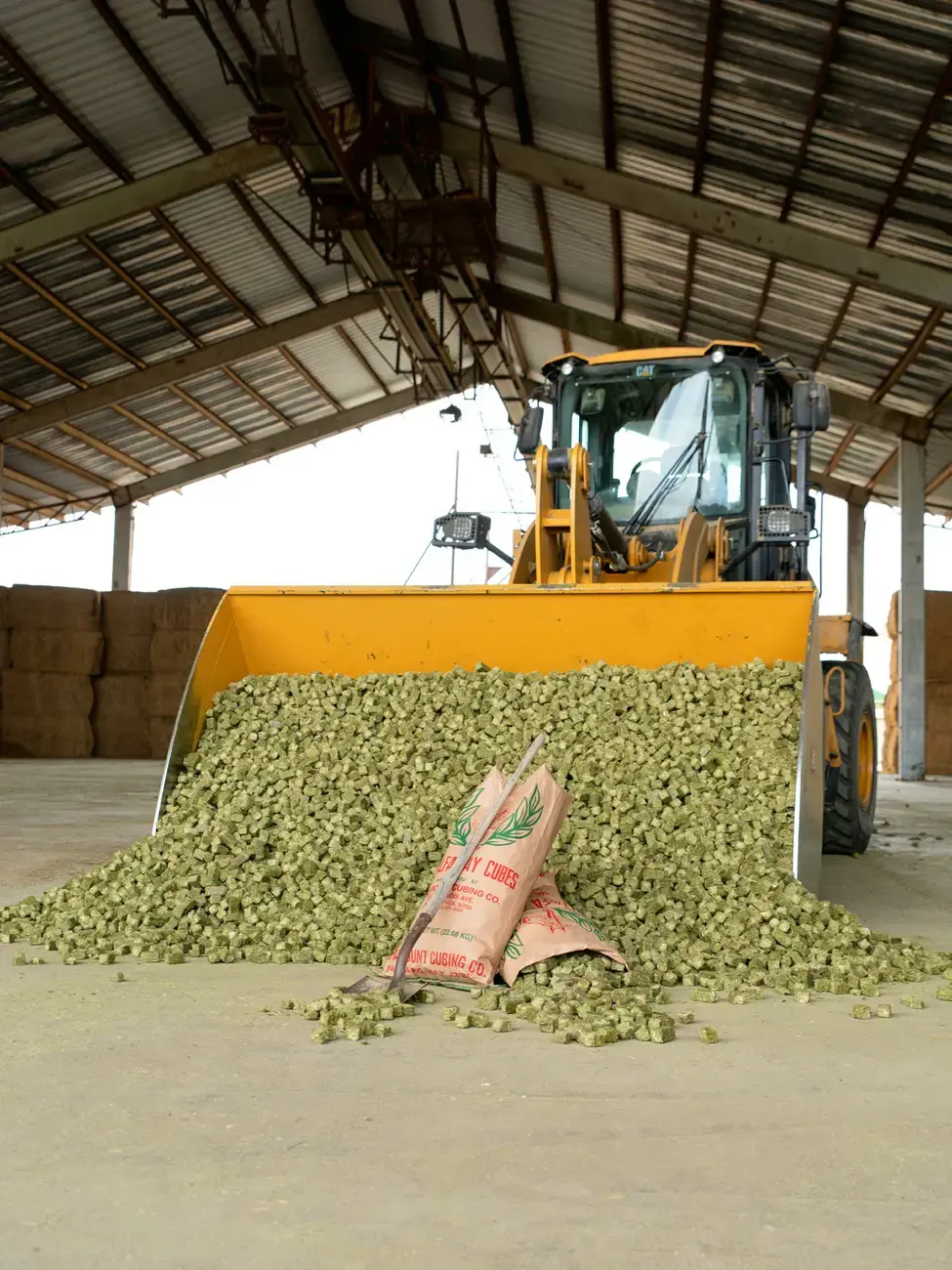
By using a combination of all three, you can provide complete, adaptable nutrition throughout your herd or flock’s life cycle. From convenience to quality, these feeds form the foundation of smarter livestock care.
RR Ranch is your trusted source for all three. We provide quality, locally sourced feed for livestock that supports animals of every age, species, and purpose.
Whether you’re feeding for performance, breeding, growth, or maintenance, hay bales, alfalfa cubes, and pellets give you the tools to build a healthier, more productive herd.


Comments