
Types of Horse Feeders: Which One is Right for Your Barn?

Introduction to Horse Feeders
Choosing the right horse feeder is more than a matter of convenience—it directly affects your horse’s health, behavior, and your overall feed efficiency. With a wide range of feeder designs available today, it’s essential to understand how each one functions.
A well-suited horse feeder can reduce feed waste, minimize mess, and promote natural eating behaviors. For barn owners managing multiple horses, choosing the right system also plays a crucial role in cost and time management.
When selecting a horse feeder, consider your horse’s habits, the type of feed you're using, and the environment in which the feeder will be placed. Not all feeders are created equal, and some may work better in stalls while others thrive in pastures.
In this comprehensive guide, we’ll break down the most common types of horse feeders. You’ll learn the benefits and drawbacks of each, making it easier to determine what works best for your barn. Mad Barn says. “When selecting a hay feeder, there are a number of considerations to keep in mind. The size and eating habits of your herd determine the required capacity and number of access points.”
Feeder designs have evolved significantly with modern materials and horse behavior research. Whether you manage a boarding facility or care for your own small herd, finding the best horse feeder requires balancing budget, durability, and safety.
A poorly designed feeder can lead to feed contamination, waste, or even injury. Investing in the right horse feeder can ultimately save you money and improve your horses' well-being.
This guide includes 15 detailed sections, each focusing on a specific type of horse feeder. From traditional hay racks to automatic feeding systems, we cover all options. Our aim is to provide you with the educational tools to make informed choices about your horse feeder.
Please feel free to comment your thoughts on horse feeders and share with us what has been your go to!
Hay Racks: The Classic Option
Hay racks are among the most recognizable horse feeder styles. Typically mounted on walls or gates, they allow horses to access hay without stepping in it. The elevated position of a hay rack helps keep feed clean and dry. For many barns, this style remains a favorite due to its simplicity and affordability.

One of the key benefits of this horse feeder is its ability to reduce hay waste. Horses can’t paw through the hay or scatter it across their stall, which means you spend less time cleaning and more time riding. However, hay racks don’t simulate natural grazing positions, which may lead to neck or back strain over time.
When choosing this type of horse feeder, look for models with rounded edges and spaced bars to prevent horses from getting their teeth or hooves caught. Some modern hay racks come with liners to catch dust and debris, keeping feeding areas cleaner.
Despite their benefits, hay racks may not be suitable for every barn setup. They work best in stall environments where horses are confined and supervised. For pasture settings, another type of horse feeder may be more appropriate.
If you’re looking for a basic, durable horse feeder for hay, the classic hay rack is a practical and cost-effective choice. Just make sure to monitor its use to prevent wear or sharp edges that could become hazardous.
Ground Feeders: Simulating Natural Grazing
Ground feeders are designed to mimic how horses would eat in the wild—head down, grazing from the ground. This horse feeder supports a more natural feeding posture, which can be beneficial for respiratory health and digestion. Many equine experts recommend ground feeding when possible.
There are different styles of ground horse feeders, including enclosed tubs, rubber pans, and low-profile bins. The key is ensuring the feeder is stable and difficult to tip over. Some models include weight or anchoring systems to keep them in place.
A potential downside of this horse feeder is increased exposure to dirt and contamination. Horses may paw at their feed or defecate nearby, increasing the risk of ingesting harmful bacteria or parasites. Cleaning frequency is essential to maintaining a healthy feeding environment.
Ground feeders are ideal for pasture settings or open barns where multiple horses share a space. If you go this route, ensure the feeder is large enough to prevent competition and aggressive behavior.
Ultimately, a ground horse feeder promotes better eating posture and a more relaxed feeding experience. However, it requires careful hygiene practices and good placement to minimize feed loss and contamination.
Corner Feeders: Space-Saving in Stalls
Corner horse feeders are popular in stall settings where space is limited. Designed to fit neatly into stall corners, these feeders maximize room while keeping feed contained. They’re typically made of durable plastic or rubber and are mounted securely to the wall.

This horse feeder style keeps hay or grain off the ground and offers a safe, low-profile feeding station. Horses tend to feel more secure when eating in corners, as it provides a sense of enclosure and protection.
Installation is relatively easy, but proper mounting is crucial to avoid accidents. Loose hardware or poorly fitted feeders can lead to injuries. For best results, ensure the feeder is at an appropriate height to prevent strain while eating.
Corner feeders can hold various types of feed, from hay to pelleted rations. However, overfilling can lead to spillage, so careful portioning is necessary. It’s also important to clean these feeders regularly since corners can trap moisture and bacteria.
If you’re managing a small barn or looking to upgrade your stall setup, a corner horse feeder is an efficient and safe solution. Just be mindful of placement and upkeep to ensure it continues serving your horses well.
Wall-Mounted Feeders: Versatility Meets Convenience
Wall-mounted horse feeders are designed to attach securely to stall walls or fences, keeping feed elevated and reducing waste. These feeders often feature compartments or angled designs to make feed access easier for the horse. They're especially helpful in stalls or covered feeding areas where space is limited but accessibility is important.
One advantage of this type of horse feeder is how it keeps feed off the ground, minimizing contamination. Horses can easily reach the feed, and it's more difficult for them to knock the feeder over or step into it. That stability is ideal for horses that may be rough on traditional ground feeders.
Many wall-mounted feeders are made of heavy-duty plastic or metal and come with drain holes to avoid mold buildup. This design is beneficial in barns where water buckets and feed areas are close together. Since these feeders are typically bolted in place, they reduce spillage and can be easily monitored.
While wall-mounted horse feeders are convenient, proper installation is critical. If not mounted at the correct height or securely fastened, they can pose safety risks. Horses may get their heads stuck or even break the feeder during aggressive feeding.
Overall, wall-mounted horse feeders are excellent for barn managers who want a clean, contained feeding system that conserves space and reduces feed waste. Ensure regular maintenance to keep the feeder clean and safe.
Slow Feed Hay Nets: Healthier Eating Pace
Slow feed hay nets are a widely used horse feeder style designed to regulate how quickly horses consume their hay. These nets feature small holes that require horses to pull out hay in smaller amounts, mimicking natural grazing patterns and slowing down feed intake.
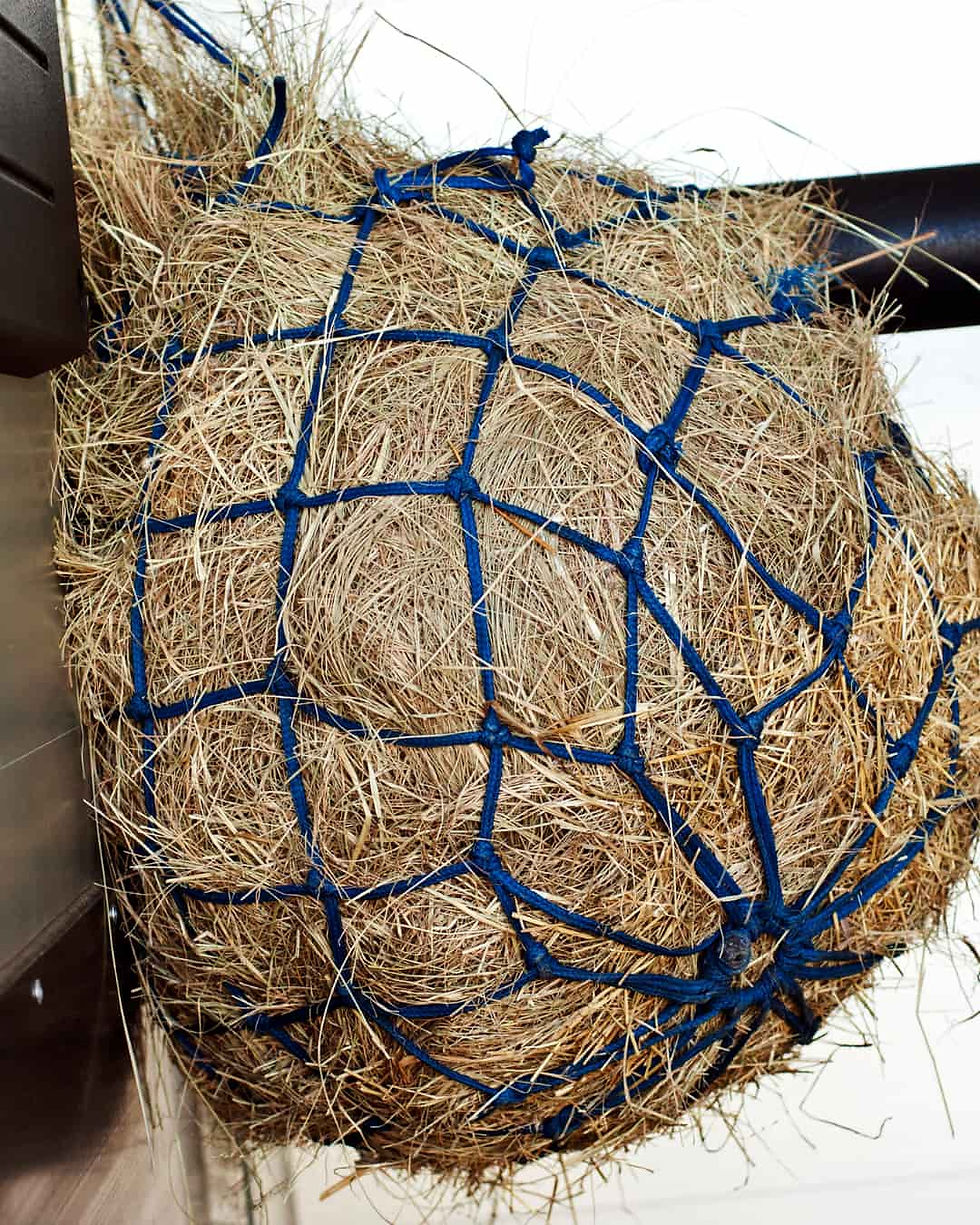
This type of horse feeder is excellent for horses prone to obesity, ulcers, or boredom. By making hay last longer, slow feed nets encourage mental stimulation and can help prevent stereotypic behaviors like cribbing or stall walking. They are especially popular in barns aiming for controlled diets and healthier digestion.
There are different sizes and mesh widths to suit various needs. Some slow feed hay nets can hold entire flakes or even full small bales. They can be hung from stall walls, tied to fences, or used with hay-saving frames or boxes for added structure.
The main challenge with this horse feeder is safety. Poorly secured nets can entangle a horse’s hoof or halter. Choosing durable, breakaway designs and securing them properly can help mitigate this risk.
If your goal is to mimic a more natural, pasture-like eating behavior indoors or in dry lots, a slow feed hay net is a smart and cost-effective horse feeder solution. It reduces hay waste, supports better digestion, and keeps horses occupied longer.
Hay Bags: Portable and Practical
Hay bags are a convenient, portable type of horse feeder designed for both travel and stable use. These soft-sided feeders are often used at horse shows, in trailers, or temporary stalls. They’re usually made of heavy-duty nylon and include one or more access openings for the horse to pull hay through.
One advantage of hay bags is their portability. They’re lightweight and easy to hang just about anywhere, from stall walls to fences or trailers. If you have horses that travel frequently, a hay bag is a must-have horse feeder to maintain consistent feeding routines.
Hay bags come in various sizes and with different hole configurations. Some have large openings for unrestricted feeding, while others feature slow feed designs. This flexibility lets owners tailor the feeding pace to each horse’s needs.
Durability is a consideration with hay bags. Chewing, pawing, or constant use can cause tearing, so investing in quality materials and checking for wear is essential. Like any horse feeder, safety is paramount—bags should be hung securely and at appropriate heights.
Whether you need a temporary solution or a consistent travel companion, hay bags are one of the most versatile horse feeder types. They support convenience and control in a lightweight design.
Hanging Feed Tubs: Simple and Efficient
Hanging feed tubs are another stall-friendly horse feeder option. These feeders are typically rubber or plastic and are attached by hooks or straps to stall walls or gates. They’re great for grain, pelleted feed, or soaked rations, and are easy to remove and clean.

This type of horse feeder is ideal for barns with multiple horses, as tubs can be easily swapped out, labeled, or stored between meals.
They offer an ergonomic feeding position and help prevent feed contamination by keeping contents off the ground.
One of the main advantages is ease of use. Hanging feed tubs can be taken down quickly, rinsed out, and refilled.
This efficiency makes them especially helpful during feeding time in larger facilities. They also allow horses to eat with their head lowered, which supports healthy chewing and swallowing mechanics.
However, hanging feed tubs can be easily knocked around or flipped by curious or aggressive horses. This can result in spilled feed or even minor injuries. Choosing feeders with secure mounting hardware or protected hangers can mitigate these risks.
In summary, a hanging feed tub is a flexible, cost-effective horse feeder option that supports routine feedings while offering easy maintenance and convenience.
Rubber Feed Pans: Low-Cost and Versatile
Rubber feed pans are among the most budget-friendly horse feeder options. These durable pans are made from flexible rubber, which holds up well to rough treatment, including being stepped on or tossed around by horses.
This horse feeder is commonly used for grain, supplements, or soaked feed. It's also popular for ground-level feeding of hay in confined spaces. The rubber material makes it safe for horses to eat from without risk of injury, and it’s easy to clean between uses.
The main benefit of rubber feed pans is their versatility. You can use them indoors or out, for single feedings or group feeding in a shared pen. Their wide, shallow design encourages even timid horses to access food without competition.
On the downside, this horse feeder type is easy to move or tip over. Horses may step into them, drag them across the paddock, or spill the contents. To avoid waste, some owners choose to place rubber pans inside rubber tires or weighted boxes.
For barns seeking a simple, multipurpose feeding solution, rubber feed pans are a great low-tech horse feeder choice—just keep an eye on where they end up after mealtime!
Pasture Feeders: Feeding in Open Spaces
Pasture feeders are designed for use in open turnout areas or paddocks. These are larger, heavy-duty horse feeders meant to accommodate several animals at once. They often include metal frames with troughs or hay baskets, and some come with weather-resistant covers.

The primary benefit of a pasture horse feeder is that it supports communal feeding in larger herds. It reduces hay waste by keeping forage elevated and contained while allowing multiple horses to eat comfortably at the same time.
Safety is an important consideration. Look for pasture horse feeders with rounded edges and reinforced legs to prevent tipping.
Horses in turnout settings may compete for food, so the feeder must accommodate group dynamics and allow for adequate spacing.
Pasture feeders are ideal for round-the-clock turnout where hay is offered free choice. However, they require regular maintenance—removing leftover feed, rotating locations to prevent muddy areas, and cleaning surfaces to avoid mold growth.
If you manage horses in an open environment year-round, a pasture horse feeder is a worthwhile investment that promotes easier, cleaner feeding and less overall hay loss.
Round Bale Feeders: Bulk Feeding Made Easy
Round bale feeders are specifically designed to hold large bales of hay and allow horses to eat over an extended period. These horse feeders are excellent for reducing labor and providing forage access throughout the day, especially in large herds or during winter months.

There are several styles of round bale horse feeders, including ring-style, cone-shaped, and cradle designs. Some are made from steel tubing, while others include plastic or composite components.
The goal is to minimize waste and keep the hay elevated to prevent ground contamination.
One advantage of this horse feeder type is its ability to cut down on daily feeding chores. With a single bale, you can feed several horses for days. This is particularly useful in pasture or dry lot settings.
However, round bale feeders come with safety considerations. Poorly designed models can trap legs or hooves, so it’s crucial to select feeders built with horses (not cattle) in mind. Adding a roof or tarp can also help protect the hay from rain and snow.
Overall, if you’re feeding large groups of horses or want to automate forage delivery in turnout areas, a round bale horse feeder is both practical and cost-effective.
Trough Feeders: Durable and Easy to Fill
Trough-style horse feeders are long, open containers often made from galvanized steel, heavy-duty plastic, or concrete. They’re commonly used in barns, paddocks, or group settings to provide feed or water to multiple horses simultaneously.
This horse feeder supports fast, efficient feeding of grains or hay pellets. Troughs are easy to fill and allow horses to eat side-by-side, which is convenient for handlers with tight schedules. They can also be used to soak beet pulp or serve bran mashes.
One of the main benefits of a trough horse feeder is its durability. They’re less likely to tip, weather-resistant, and easy to clean. Many troughs are elevated slightly to reduce contamination, although low-profile versions exist for ground feeding.
As with other shared feeders, competition can become an issue. Dominant horses may monopolize the space, so proper herd management and feeder sizing are essential to avoid bullying or uneven consumption.
If you’re looking for a reliable, multipurpose horse feeder that handles volume well, troughs are a tried-and-true option that works across many barn types.
Automatic Horse Feeders: Technology Meets Tradition
Automatic horse feeders are an innovative option for barn managers seeking consistency and convenience. These programmable devices dispense feed at set times throughout the day, reducing the need for manual feeding and promoting regular meal intervals.

This horse feeder style is ideal for horses with special dietary needs, including insulin-resistant horses or those on a strict ration schedule.
Automatic feeders are usually mounted on stall walls or gates and can dispense grains, pellets, or supplements.
The key advantage is control and efficiency. Owners can set specific times and quantities, ensuring each horse gets exactly what it needs without overfeeding. Some systems are even app-controlled or solar-powered.
However, automatic horse feeders come with a learning curve and a higher upfront cost. Installation must be precise, and horses need to be monitored during the transition to ensure they adjust well. Backup feeding plans should be in place in case of mechanical failure.
For high-performance barns, breeding programs, or horse owners with busy schedules, automatic feeders offer convenience, consistency, and peace of mind.
Covered Feeders: All-Weather Protection
Covered horse feeders feature roofs or hoods designed to protect feed from the elements. These are particularly useful in climates with frequent rain, snow, or strong sun, and they help reduce feed spoilage and mess.
Whether you’re using them for hay or grain, a covered horse feeder shields food from weather exposure and prevents sogginess or mold growth. These feeders are often seen in turnout areas and large paddocks.
Covered feeders come in many forms, including metal hay huts, walk-in shelters with built-in feeders, and troughs with overhead awnings. Choose models with strong frames and ventilation to prevent condensation.
This type of horse feeder is ideal for year-round outdoor feeding. They reduce waste and keep feeding areas drier and cleaner, improving herd health and hay longevity.
If you’re feeding horses outdoors in variable weather, investing in a covered horse feeder ensures consistent access to clean, dry feed regardless of the season.
Custom-Built Feeders: Tailored for Your Barn
For barns with unique layouts or horses with special needs, custom-built horse feeders offer tailored solutions. These feeders are designed from scratch or modified from existing styles to accommodate space constraints, feeding routines, or medical conditions.

The biggest benefit of a custom horse feeder is flexibility. You can choose materials, dimensions, feeding ports, and safety features specific to your setup.
This is helpful for horses with dental issues, disabilities, or specific eating habits.
Custom feeders can also be designed for better ergonomics, improved efficiency, and aesthetic integration with barn structures.
Work with an experienced carpenter or fabricator who understands equine behavior and safety standards.
The main drawback is cost and time. Custom horse feeders often require more resources and may not be easily replaced. But for barns with long-term needs, they offer unmatched precision and value.
When off-the-shelf options don’t cut it, a custom horse feeder can provide a personalized feeding experience that meets both your needs and your horse’s comfort.
Choosing the Right Horse Feeder for Your Barn
Selecting the right horse feeder can have a lasting impact on your horse’s health, your barn’s cleanliness, and your feed budget. With so many options available—from traditional hay racks to high-tech automatic systems—it’s essential to understand the function, benefits, and limitations of each type.
A well-designed horse feeder will align with your feeding goals, horse behavior, and barn logistics. Whether you prioritize natural feeding positions, weather resistance, or feed control, there’s a solution out there tailored to your needs.

When evaluating horse feeders, always consider the material quality, ease of cleaning, safety features, and compatibility with your barn layout.
Take the time to monitor your horse’s response to new feeders and be open to adjustments as needed.
For even more information on different horse feeders, check out this article from Riding Warehouse!
Remember that the best horse feeder for your barn might not be the most expensive or elaborate. Often, the most effective choice is the one that balances practicality, durability, and your specific management style.
By investing wisely in your horse feeder system, you’re investing in the well-being of your animals and the efficiency of your entire barn operation.
Local hay for livestock is available at Rockin Rafter Ranch. Check out inventory and let us know how we can help you!

Comments